
Lavender ( Lavandula spica)
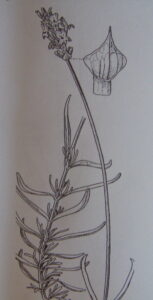
History:
It’s fresh and clean scent was a favorite additive to perfume the bathing water of the Greeks and Romans. This herb was widely used as an insecticide, and it is known that by applying its oil to leather it prevented all kind of pests. It was also used as an air freshener, to mask bad smells in houses and streets. For a long time, it has also been used as a medicinal plant.
Location:
Typical of the central and western part of the Mediterranean basin.
Composition:
Essential oil (0.5%-0.6%): free alcohols (20%-30% of the oil) such as linalool, borneol and geraniol. Also contains β-oxycymene, cineol (20%) and camphor (20%); esters in discrete amounts (2%-3%), usually in the form of valerianates, butyrates and acetates (linalyl acetate). The drug also contains tannins (5-10%), probably rosmarin oil, coumarin derivatives, flavonoids, triterpenes (ursolic acid) and phytosterols.
Medicinal properties:
External use: antiseptic and healing. In dermatology it can be used effectively to disinfect sores and promote their healing. It releases pain thanks to its analgesic action. It is soothing and a skin regenerator.
Hemp (Cannabis Sativa)
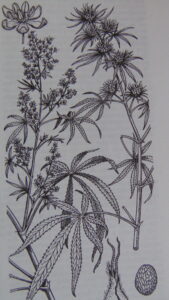
History:
Cannabis Sativa has been used for industrial, medicinal and/or recreational purposes since ancient times. However, research on its active ingredients is relatively recent. Its use was known in China about five thousand years ago. It was used to obtain fibers and oil. Its curative properties are reflected in several treatises of considerably antiquity.
In India, it was part of some religious rituals and was used for its healing properties, a practice that has been preserved until very recently. At the beginning of the Christian era, Pliny “the Elder”, Dioscorides and Galen described its possible medical applications. The Arabs used it medicinally and recreationally. However, its popularity was not the same in every country of Islamic culture, and it was even banned in specific historical situations.
Dioscorides, who died in 90 AD, studied the plants of various countries while serving as a surgeon in the Roman army. He compiled his studies in “The Materia Medica” considered for centuries to be the most important work in medical botany. In it he describes two types of cannabis. One type was used to make resistance ropes, the juice of which was good for earache. The roots of the other type were used to soften inflammations, dissolve oedemas and dissipate what he called “hard matter” from the joints.
Location:
It is currently widely distributed in temperate and subtropical regions of the world.
Composition:
The chemical composition of this species has been extensively studied. Approximately 500 compounds have been identified, including cannabinoids, terpenes, flavonoids, alkaloids, stilbenes, phenolic, amides and lignanamides.
Medical properties:
External use: Analgesic and anti-inflammatory.
THYME (THYMUS VULGARIS)
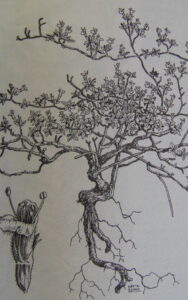
History:
The earliest historical references date back to the ancient Egypt, where it was used as an ointment in embalming and burned as an air purifier during epidemics. The Greeks also knew its medical properties for chest ailments, as an antiseptic, or against joint pain, as recorded in the writings of the doctor Galen.
Location:
Plant widespread throughout the Northern hemisphere, especially in the entire Mediterranean region, southern Europe, North Africa and Asia Minor.
Composition:
Essential oil, rich in Thymol and carvacrol, flavonoids, vitamine C, amino acids, organic acids, minerals and tannins.
Medicinal properties:
Antiseptic, antifungal, healing, antibacterial and natural antibiotics.
Marigold ( Caléndula offcinalis)
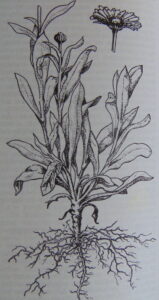
History:
It is a plant that has been used in the Mediterranean region since the time of the ancient Greeks, and before that it was already known to the Hindus and Arabs for its therapeutic qualities as a medicinal herb as well as a dye for fabrics, food products and cosmetics.
Location:
It is thought to have originated in Egypt and was cultivated in Europe in the 12th century, then spread to the rest of the world. It exists sub spontaneously throughout the Mediterranean region.
Composition:
Essential oils (0.2 to 0.3 %), salicylic acid, phenolic acid, sterols, very abundant carotenoids, glycosides, flavonoids, tannins, a bitter principle called calendulin, a triterpene saponin, pigments, xanthophylls, mucilages, umbelliferone, esculetin and scopoletin.
Medicinal properties:
The heads or ligulate flowers of marigold are widely used for their anti-inflammatory, spasmodic, emmenagogue, cholagogue, sedative, sudorific, vulnerary and bactericidal properties against Staphylococcus aureus and Streptococcus fecalis; extracts of the flowers are recommended in the treatment of leucorrohea.
In internal application it is used to stimulate hepatic activity and therefore bile secretion, in treatment of gastric ulcers; and externally, decoction, tincture or ointment are used in bedsores, varicose ulcers, skin rashes. It is used in the form of infusion as a component of compound teas, in topical form, in tincture, and for the preparation of medicines such as anti-ulcer gel, vaginal suppositories and aqueous emulsion for the treatment of skin conditions.
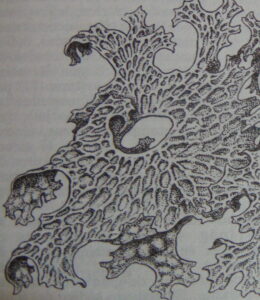
Lichen
History:
Lichens are one of the plant groups that received the least attention in classical treatises on botany, despite the fact that the relationship between humans and some of their species has been documented from very early times.
In 1909, the Russian lichenologist Konstantin Mereschkowski presented a research work in which he attempted to explain a new theory of symbiogenesis through lichens. It was not until 1939 that the Swiss researcher Eugene A. Thomas succeeded in reproducing the lichen phenotype in the laboratory after the artificial union of its two identified components.
Location:
They are widespread throughout the world. Because of their slow development, they cannot normally survive on mobile or changing substrates. Therefore, they rest on dead vegetation, mainly stumps, rocks (saxicolous) or decomposing plant matter.
Composition:
Lichens are organisms of a dual nature (symbiosis). What predominates in them is a fungus (mycobiont), which forms the main mass of the lichen and its second component is an algae (photobiont).
Medicinal properties:
Antibacterial, antiviral, thanks to the derivatives of usnic acid and anticancer action.